
A Developer Learns to Hunt: What Self-Teaching Code Taught Me About Self-Teaching Everything
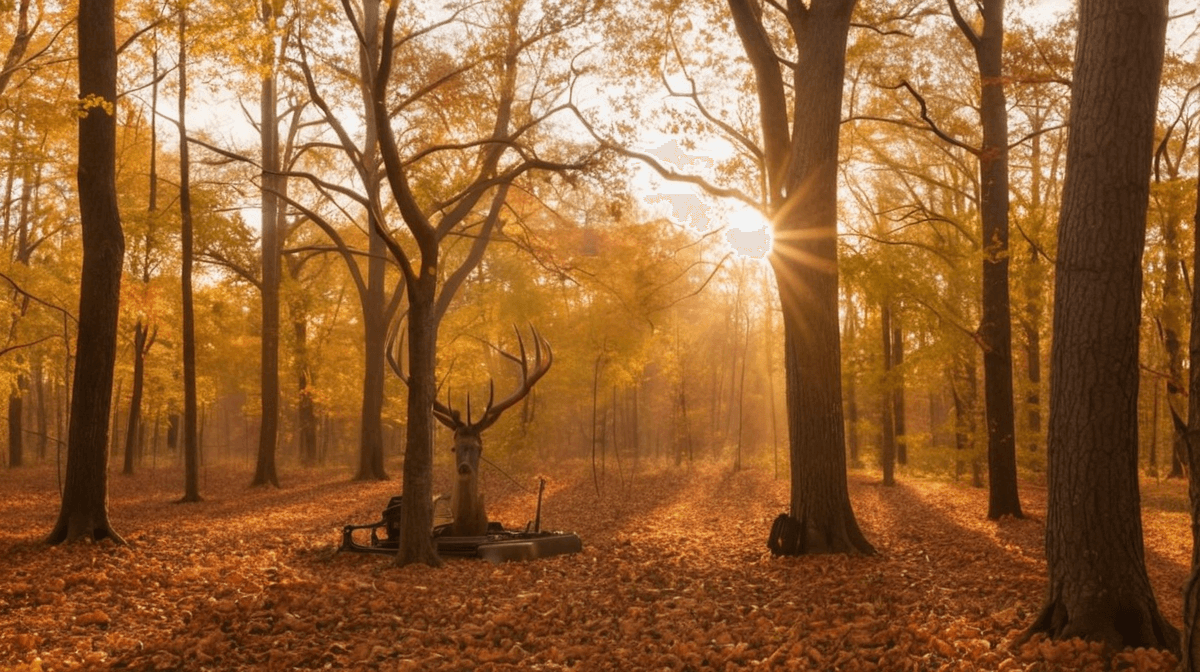
I spend most of my life staring at screens. I'm a lead engineer at my day job, I'm building a game engine startup with my best friend, and my idea of a relaxing evening is tweaking my Neovim config. So when I tell people I'm getting into hunting, I get this look — like I just told them I'm taking up competitive knitting.
But here's the thing: I've been down this road before. Not the hunting road specifically, but the "I know absolutely nothing about this and I'm going to teach myself from zero" road. I walked that road with programming fifteen years ago, and it turned into a career. Now I'm walking it again with a rifle instead of a keyboard, and the process is almost identical.
The Self-Taught Pattern
I didn't go to school for computer science. I learned to code the way a lot of us did — late nights, bad tutorials, breaking things, Googling error messages at 2 AM, and slowly, painfully, building an understanding from the ground up. Nobody handed me a curriculum. I found my own path through the mess.
And now I'm doing the exact same thing with hunting.
I'm currently buried in the research phase. YouTube rabbit holes about deer behavior. Forum threads from 2011 about optimal tree stand height. Wisconsin DNR regulations — which, by the way, read exactly like an API spec. Zones, seasons, tag types, legal methods, it's all there and it's all important. I actually read the whole thing. Twice. Old habits.
My wife Rēsse walked into my office the other night and found me cross-referencing OnX maps with historical wind pattern data, and she just said, "So this is your new side project."
She wasn't wrong.
Phase One: The Overwhelming Firehose
Remember the first time you tried to learn to code? You didn't even know what you didn't know. Someone says "just learn JavaScript" and you're like, okay, but what's a variable? What's a function? Why are there seventeen ways to declare one? Why is everyone arguing about semicolons?
Hunting is exactly this right now for me. Everyone says "just get out there" but — get out where? Public land or private? Gun season or bow? What caliber? What camo pattern? Do I need scent eliminator? What's a mock scrape? Why are there four different deer seasons in Wisconsin and which one should a beginner start with?
The information firehose is real, and just like with code, the hardest part isn't finding information — it's figuring out what's actually relevant to where you are right now versus what's advanced-level noise that'll just confuse you.
When I was learning to code, I made the mistake of trying to understand webpack configuration before I could write a for-loop. I can already feel myself doing the same thing with hunting — researching cellular trail camera networks when I should be learning to identify deer tracks.
Phase Two: Gear Acquisition Syndrome
This one's funny because it's identical in both worlds.
When you're a new developer, you think the right tools will make you good. Better IDE. Better mechanical keyboard. Better monitor. You spend three days configuring your terminal theme instead of writing code. The tools become a proxy for progress — if my setup looks professional, maybe I'll become professional.
The hunting industry is the same trap but with more camouflage. I have spent an embarrassing amount of time comparing rangefinders, debating bipod versus shooting sticks, and almost dropping $400 on a cellular trail camera system before catching myself doing exactly what I do with JavaScript frameworks — chasing tools instead of mastering fundamentals.
I had to give myself the same talk I'd give a junior dev: the best programmers I know could build great software in Notepad. The best hunters I've met talk about woodcraft and patience, not which brand of scent killer they use. Invest in understanding, not accessories.
I still bought the rangefinder though. Some habits die hard.
Phase Three: Finding Your Mentors
Here's where hunting has genuinely surprised me. When I was teaching myself to code, the community was a mixed bag. Stack Overflow could be brutally dismissive. Open source maintainers sometimes treated beginners like an inconvenience. There was a lot of gatekeeping — this idea that if you didn't learn it the "right" way, you didn't really earn it.
The hunting community — at least the one I've found in Wisconsin — is the opposite. I've had guys at the range spend an hour helping me understand my rifle, refusing any payment. I've had complete strangers in online forums write paragraph-long responses to my basic questions without a hint of condescension. The "I was a beginner once" mentality is alive and well.
It reminds me of the best parts of the dev community — the people who remember what it's like to not know something and meet you where you are instead of where they think you should be. Tech could honestly learn a lot from hunting culture in this regard.
Phase Four: Respecting What You Don't Know
When I taught myself to code, I hit a dangerous phase where I knew just enough to be reckless. I'd ship code to production without tests, deploy on Fridays, bypass code review because "I know what I'm doing." I didn't yet understand that confidence without competence is how you break things.
Hunting has much higher stakes for that mistake. A firearm is not a keyboard. The consequences of carelessness aren't a rollback and a postmortem — they're permanent. This is something I think about constantly as I prepare.
I've taken my hunter safety course. I practice at the range regularly. I'm studying shot placement with the same intensity I'd study system architecture. Because in both disciplines, the sign of real competence isn't knowing how to do the thing — it's understanding everything that can go wrong when you do it badly.
The emotional weight of hunting is something I'm preparing for too. I haven't harvested a deer yet, but I've thought a lot about what it will mean when I do. Taking a life is serious. The hunters I've talked to take it seriously, and that deep respect for the animal is something I connect with more than I expected. It's the opposite of the disposable, ship-it-and-forget-it mentality that sometimes creeps into tech.
Phase Five: Building the System
This is where my engineering brain actually helps. I can't control when a deer shows up, but I can build a system that puts me in the right place at the right time.
Trail cameras are just logging. Topo maps are architecture diagrams. Deer trails are the hot paths in your profiler. Wind patterns are network traffic — you have to understand the flow or your whole setup fails. Scouting is code review. Every piece of information feeds into a mental model of how the system works.
I'm treating my first deer season like I'd treat launching a new product. Research the domain. Build the infrastructure. Test the components individually. Then put it all together and see what happens. Will it work perfectly the first time? Of course not. My first deployment never works either. But that's what iteration is for.
My five-year-old son Loki already asks to "check the cameras" with me — even though I only have one camera and it's mostly captured photos of squirrels. My sixteen-year-old daughter Ryann thinks it's "kinda cool, I guess" (high praise from a teenager). And Rēsse has accepted that our garage is slowly filling with outdoor gear alongside the server rack equipment, which honestly might be the most Milwaukee sentence I've ever written.
The Self-Taught Advantage
People sometimes ask if I wish I'd gone to school for computer science instead of teaching myself. I always say no. Not because the education isn't valuable, but because the process of teaching yourself something hard — truly hard, from nothing — gives you a meta-skill that applies to everything else.
You learn how to learn. You learn how to sit with confusion and not panic. You learn how to break a massive, intimidating subject into small pieces and tackle them one at a time. You learn that competence isn't a destination — it's a direction. You're always learning, always adjusting, always a beginner at the next thing.
That's what hunting is for me right now. I'm a beginner. I don't know what I'm doing yet. And I'm completely fine with that, because I've been here before, and I know how this story goes.
You show up. You put in the work. You stay humble. You find people who know more than you and listen hard. You make mistakes and learn from them instead of pretending they didn't happen.
And eventually, one morning, you look up and realize you're not a beginner anymore.
I'm not there yet with hunting. But this fall, I'll be in the woods. And whatever happens, I'll have built the system, done the homework, and earned my seat in the tree stand.
Just like I earned my seat at the keyboard.
If you're a developer curious about hunting — or a hunter curious about code — reach out. I'm deep in the learning phase and always happy to compare notes. No gatekeeping, no judgment. We were all beginners once.